The Canadian battles that changed history were not necessarily the bloodiest or most celebrated. They were the engagements that altered control of territory, influenced Canada's development as a nation or reshaped its role in international affairs. From the British conquest of New France to Canada's modern military operations in Afghanistan, these conflicts reveal how warfare affected the country's borders, institutions and national identity.
| Battle | Date | Historical significance |
|---|---|---|
| Plains of Abraham | 1759 | Changed imperial control of New France |
| Queenston Heights | 1812 | Helped defend British North America against American invasion |
| Vimy Ridge | 1917 | Became a symbol of Canadian military achievement and national identity |
| Passchendaele | 1917 | Demonstrated Canada's contribution and the human cost of the First World War |
| Canada's Hundred Days | 1918 | Established Canada's reputation for sustained offensive operations |
| Juno Beach | 1944 | Showcased Canada's role in the D-Day landings |
| Dieppe Raid | 1942 | Exposed weaknesses in Allied amphibious planning |
| Battle of the Scheldt | 1944 | Opened access to Antwerp, a vital Allied supply port |
Canada did not become a country until Confederation in 1867, but the history of the land and peoples that shaped it stretches back much further. Later conflicts, particularly the First and Second World Wars, helped establish Canada's reputation as a military power and strengthened its claims to a greater international voice. Understanding these battles requires looking beyond victories and defeats to examine what changed afterwards, who benefited and whose experiences were overlooked.


🧭What Makes a Battle Historically Transformative?
A battle becomes historically transformative when its consequences extend beyond the immediate military result. Some engagements change who governs a territory, while others expose weaknesses in military planning, influence political decisions or transform how a country understands itself.
Casualties and battlefield success matter, but neither automatically determines a battle's historical importance.
A victory can be strategically insignificant, while a costly defeat can prompt reforms that affect subsequent generations. Canada's history illustrates this distinction particularly well. The Plains of Abraham contributed to a major change in imperial control, whereas the Dieppe Raid in 1942 failed to achieve its principal objectives but exposed serious problems in amphibious warfare.
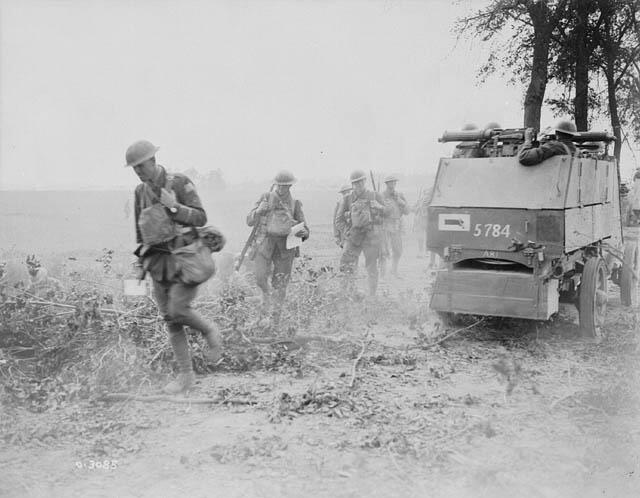
Vimy Ridge became a powerful national symbol, although its political meaning developed through a broader process of Canadian military participation and constitutional change.
There are several criteria for measuring historical impact:
Territorial consequences
Political and constitutional change
Lasting military or social influence
These criteria also help prevent historical hindsight from distorting the past. Commanders and soldiers could not know exactly how their actions would be remembered decades later. Their immediate objectives often differed from the political meanings subsequently attached to their experiences.
Separate Military Success From Historical Importance
Military success describes whether forces achieved their immediate objectives. Historical importance asks what the outcome changed over time. The distinction matters because a successful operation may produce little lasting change, while a failed operation can expose vulnerabilities that force governments and military leaders to reconsider their strategies.
A battle can be a military defeat but still change history. The Dieppe Raid failed, but exposed weaknesses in Allied amphibious planning.
The Dieppe Raid is a clear example. Canadian troops suffered devastating losses without capturing the French port. Although the operation contributed lessons to later Allied planning, it would be misleading to describe those casualties as necessary or to assume that the raid alone made the Normandy landings successful. Historical assessment must acknowledge both the lessons learned and the human cost.
Avoid Treating Canada as a Finished Nation Before Confederation
Canadian history did not begin in 1867. Before Confederation, Indigenous nations occupied and governed their territories, while French and British imperial powers competed for influence. The conflicts of this period helped determine which colonial institutions, legal traditions and political relationships would shape the emerging country.
Canada's history began long before 1867. Indigenous nations governed their territories before European colonisation, while imperial conflicts helped shape the land and institutions inherited by modern Canada.
This distinction is particularly important when discussing the War of 1812. The participants were not fighting for an independent Canadian nation. British regulars, colonial militia and Indigenous allies defended British North America against American invasion. Their survival helped preserve the circumstances in which Canada could later develop, but it did not guarantee Confederation or resolve the conflicts over Indigenous sovereignty that continued afterwards.
🗺️Battles That Decided Control of Northern North America
Before Canada emerged as a federation, battles between European empires helped determine the political geography of northern North America. These conflicts were not simply distant European rivalries transplanted overseas.
1759
Battle of the Plains of Abraham
British forces defeat the French outside Québec City, beginning the decisive phase of Britain's conquest of New France.
1760
British conquest of New France
The surrender of Montréal ends organised French colonial military resistance in Canada, consolidating British control.
1763
Treaty of Paris
France formally cedes Canada to Britain, establishing a new imperial framework while French-speaking communities retain their cultural identity.
1812-1815
War of 1812
British forces, colonial militia and Indigenous allies resist American invasion, helping preserve British North America.
Conflicts affected settlements, trade, Indigenous diplomacy and the institutions that developed across the territory. Their consequences continue to influence Canada's regional identities and constitutional history.
The Battle of the Plains of Abraham
Fought outside Québec City on 13 September 1759, the Battle of the Plains of Abraham was a decisive engagement in the Seven Years' War. British forces under James Wolfe defeated French troops commanded by Louis-Joseph de Montcalm. Both commanders died from wounds sustained during the campaign. Québec subsequently surrendered, and Montréal fell to British forces in 1760.
British victory:
Opened the way for the conquest of Québec.
French cultural survival:
French language and traditions endured under British rule.
Constitutional legacy:
The change in imperial control influenced Canada's later political development.
The Treaty of Paris in 1763 formally transferred New France to Britain. This transformed the colonial balance of power and established the foundations for a British political system alongside an enduring French-speaking population. The consequences remain visible in Québec's language, civil law traditions and distinctive political identity. The battle was therefore a territorial turning point with constitutional and cultural consequences, rather than the single moment Canada became a nation.
The War of 1812 and the Defence of British North America
The War of 1812 tested whether the United States could conquer British North America. At Queenston Heights in October 1812, British regulars, militia and Indigenous allies resisted an American invasion across the Niagara River. Major-General Isaac Brock was killed, but the American force was eventually defeated.
| Participant | Main interest |
|---|---|
| United States | Expansion and opposition to British policies |
| Britain | Defence of its North American territories |
| Indigenous nations | Protection of territory and political sovereignty |
| Colonial militia | Defence of British North American settlements |
The Treaty of Ghent ended the war without major territorial changes. Its importance lay in the survival of British North America, not in a decisive conquest of American territory. Indigenous nations played an essential role in resisting American expansion, yet the postwar settlement failed to secure their long-term territorial interests. The conflict helped preserve the conditions for Canada's later development while leaving major questions of sovereignty unresolved.
🎖️Battles That Forged a Canadian Military Reputation
Canada's participation in the First World War strengthened its military reputation and increased pressure for greater recognition within the British Empire. Canadian forces developed experience in large-scale operations, but their influence came through sustained performance across multiple battles rather than a single spectacular victory.
| Battle | Date | Military and diplomatic consequence |
|---|---|---|
| Vimy Ridge | 1917 | Strengthened Canadian military reputation and national memory |
| Passchendaele | 1917 | Demonstrated the cost and complexity of trench warfare |
| Canada's Hundred Days | 1918 | Showcased sustained offensive effectiveness |
These operations helped establish Canadian forces as a capable component of the Allied war effort. Their achievements also came at enormous human cost, and military recognition did not automatically deliver political independence. Canada's growing international status developed through wartime contributions alongside constitutional and diplomatic changes.
The Battle of Vimy Ridge
The Battle of Vimy Ridge took place from 9 to 12 April 1917. Canadian troops captured a heavily defended German position after extensive preparation and coordinated artillery support. All four Canadian divisions fought together during the assault, making the victory a powerful symbol of shared national effort.
Canadians were killed at Vimy Ridge
More than 7,000 were wounded in this battle. Vimy's importance lies partly in its tactical success and partly in the way later generations interpreted it as a milestone in national identity. However, describing it as the birth of Canada oversimplifies a longer process involving Confederation, constitutional development and other wartime contributions.
Canada's Hundred Days
From August to November 1918, Canadian forces participated in a series of offensives that helped break German defensive positions on the Western Front. Known as Canada's Hundred Days, these operations included fighting at Amiens, the Drocourt-Quéant Line and Cambrai.
Amiens:
Canadian forces contributed to the opening Allied offensive in August 1918.
Cambrai:
Canadian troops continued advancing against German positions.
Mons:
Canadian forces entered the city shortly before the armistice in November 1918.
The campaign demonstrated that Canadian troops could sustain demanding offensive operations against experienced German forces. Their effectiveness increased their standing among Allied commanders, while the eventual armistice helped bring the First World War to an end. The campaign offers a stronger picture of Canada's military contribution than focusing on Vimy alone, because it shows the accumulated impact of experience, planning and repeated operations.
🪖Battles That Tested Canada in the Second World War
Canada's Second World War experience included major victories, costly setbacks and campaigns that were essential to Allied success. The Dieppe Raid exposed weaknesses in amphibious operations, while later fighting in Italy and north-western Europe demonstrated the importance of logistics, coordination and sustained combat. These experiences challenged the idea that military history can be understood through victories alone.
Dieppe Raid
On 19 August 1942, Canadian troops formed the main assault force in an Allied raid on the German-occupied French port of Dieppe. The operation failed to secure its objectives, and the casualties were devastating. More than 900 Canadians were killed and nearly 2,000 captured.
Why intelligence and coordination proved inadequate.
Why intelligence and coordination proved inadequate.
What the raid revealed about the risks of amphibious operations.
Dieppe exposed weaknesses in intelligence, landing arrangements and coordination between ground forces and supporting units. Its lessons informed later amphibious planning, but the raid should not be romanticised as a necessary sacrifice. Its legacy includes both operational learning and the consequences of a failed mission.
The Battle of the Scheldt
Fought in Belgium and the Netherlands in autumn 1944, the Battle of the Scheldt was crucial to opening the port of Antwerp for Allied shipping. Although Allied forces had captured Antwerp, German positions still controlled access through the Scheldt estuary.
Strategic objective:
Clear the estuary leading to Antwerp.
Operational challenge:
Fight through flooded terrain and fortified German positions.
Lasting consequence:
Enable Allied shipping to supply the advance into northwestern Europe.
Canadian forces fought difficult operations across flooded terrain and heavily defended positions. Clearing the estuary enabled supplies to reach Allied armies advancing into north-western Europe. The campaign demonstrates why logistical achievements can matter as much as celebrated battlefield breakthroughs: without secure supply lines, further advances would have been far harder to sustain.
The Italian Campaign and Ortona
Canadian troops fought in Italy from 1943, facing mountainous terrain, fortified German positions and difficult winter conditions.
The Battle of Ortona in December 1943 became particularly well known for intense street fighting, with Canadian soldiers confronting defenders in a densely built town.

The campaign cost many lives but developed the experience Canadian forces carried into later operations. It also highlights a part of Canada's wartime contribution that can be overshadowed by the Normandy landings. Italy was not a secondary sideshow for the troops who fought there, but a demanding campaign that tied down German forces and contributed to the broader Allied advance.
🌐Battles That Redefined Canada's Postwar Role
After 1945, Canada became closely associated with collective security and peacekeeping, but its military history also included combat within international alliances. Korea, the Balkans and Afghanistan demonstrate how Canadian forces continued to face difficult choices involving military objectives, civilian protection and international commitments.
The Battle of Kapyong
During the Korean War, Canadian troops fought at Kapyong in April 1951 as Chinese forces advanced against United Nations positions. The 2nd Battalion, Princess Patricia's Canadian Light Infantry, helped defend the sector alongside allied forces. Their resistance contributed to holding the line during a dangerous phase of the conflict.
Kapyong, South Korea
April 1951
Canadian troops serving with United Nations forces.
The defence demonstrated Canada's commitment to collective security during the Korean War.
Kapyong strengthened Canada's reputation as a committed alliance partner during the Cold War. Its significance lies in showing that Canada's international role depended not only on diplomacy and peacekeeping but also on a willingness to fight when serving alongside allied forces.
The Battle of Medak Pocket
In September 1993, Canadian troops serving with the United Nations Protection Force in Croatia became involved in intense fighting around the Medak Pocket. The operation took place during the Yugoslav Wars, when peacekeeping forces faced a complicated environment of competing armed groups and civilian risks.
Medak Pocket, Croatia
September 1993
Canadian troops serving with the United Nations Protection Force and Croatian forces.
The engagement demonstrated the risks of peacekeeping in active conflict zones and challenged the perception that Canadian peacekeeping missions involved little direct combat.
The engagement challenged assumptions that peacekeeping was necessarily passive or low risk. Medak Pocket illustrates the difficult balance between enforcing responsibilities, protecting personnel and avoiding further escalation.
The Battle of Panjwaii
In 2006, Canadian forces fought intense engagements in Afghanistan's Kandahar province, including operations in the Panjwaii district against Taliban fighters. The fighting formed part of Canada's expanding combat mission, exposing troops to sustained danger and contributing to a wider national debate about the purpose and limits of military intervention.
Panjwaii district, Kandahar Province, Afghanistan
September 2006
Canadian forces fighting Taliban insurgents as part of the NATO-led mission.
The intense fighting highlighted the dangers of Canada's combat mission in Afghanistan and intensified national debate about military intervention, sacrifice and Canada's international role.
Afghanistan became a defining experience for a generation of Canadian service members. Panjwaii therefore matters as both a battlefield engagement and part of a broader reassessment of Canada's role in international conflict.
🏛️How These Battles Changed Canada Beyond the Battlefield
The lasting significance of Canadian battles that changed history is measured not only in territory gained or positions captured, but also in their effects on government, communities and collective memory.
The Plains of Abraham are connected to territorial control.
Vimy Ridge is strongly related to military reputation.
Kapyong is closely associated with international alliances.
Military service influenced Canada's international standing, while conflict also exposed inequalities and unresolved questions about citizenship, identity and Indigenous sovereignty.
Sovereignty, Citizenship and International Status
Canada's growing international influence developed through military participation and political change. Contributions during the world wars strengthened demands for an independent voice in foreign affairs, while later conflicts demonstrated Canada's commitments to collective defence. However, battlefield achievements alone did not create sovereignty. Constitutional developments, diplomacy and domestic political decisions were equally important.
Memory, Myth and Who Gets Left Out
National commemorations often emphasise courage and victory, but a fuller history must recognise those whose experiences receive less attention. Indigenous nations fought to protect their territories and political interests, French Canadians navigated competing loyalties and women contributed through military support, nursing, industry and community work. Veterans also experienced lasting physical and psychological consequences.
Their territorial interests and experiences must be recognised.
Their language, culture and political perspectives shaped Canada's development.
Their contributions included nursing, military support and wartime industry.
Their experiences extended beyond the battlefield into civilian life.
Remembering these experiences alongside military achievements produces a more honest account of Canada's past. It recognises sacrifice without assuming every conflict was justified or every outcome represented progress.
🏆The Battles That Matter Most Depend on the Question
There is no universally correct ranking of Canada's most historically important battles. The Plains of Abraham stands out for its territorial and constitutional consequences, Vimy Ridge for its symbolic influence on national identity, and the Scheldt for its practical contribution to Allied operations in Europe. Kapyong and Panjwaii demonstrate how military service continued to shape Canada's international commitments long after Confederation.
Which battle do you think had the greatest long-term impact on Canada?
The strongest argument for the Plains of Abraham is that the battle contributed to a change in imperial control that shaped Canada's political and cultural foundations. Vimy Ridge remains a compelling alternative because of its influence on national memory and military reputation. However, neither battle independently explains Canada's emergence as a modern state. There are also other battles to consider, such as Juno Beach and Passchendaele.
How to Build a More Honest Canadian Battle List
A balanced assessment considers what changed, how long the consequences lasted and whose experiences shaped the outcome. It includes defeats as well as victories, recognises Indigenous agency and distinguishes later national symbolism from the original objectives of a military operation. Ultimately, the most important Canadian battles are those that help explain how the country developed, what it came to represent and how its people continue to debate the costs of conflict.
References
- Canadian War Museum (n.d.) The Battle of Vimy Ridge. Available at: https://www.warmuseum.ca/articles/the-battle-of-vimy-ridge-april-9-to-12-1917 (Accessed: 20 October 2026).
- Canadian War Museum (n.d.) The War of 1812. Available at: https://www.warmuseum.ca/1812/ (Accessed: 20 October 2026).
- National Battlefield Commission (n.d.) The Battles, 1759–1760. Available at: https://www.plainsofabraham.ca/history-and-heritage/history-of-the-park/1759-1760-the-battles (Accessed: 20 October 2026).
- Veterans Affairs Canada (n.d.) The Dieppe Raid. Available at: https://www.veterans.gc.ca/en/remembrance/military-history/second-world-war/dieppe-raid (Accessed: 20 October 2026).
- Veterans Affairs Canada (n.d.) Canada and the Korean War. Available at: https://www.veterans.gc.ca/en/remembrance/wars-and-conflicts/korean-war (Accessed: 20 October 2026).
Summarize with AI:
Did you like this article? Leave a rating!

 Loading...