
Curiosity is the wick in the candle of learning.
William Arthur Ward, American Writer
We all know that person who always wins at Trivial Pursuit: they know the capital of Australia, who painted “The Starry Night,” and why the sky is blue. The awkward question is: are you that person… or are you the one checking your phone under the table to look it up? 🤫
It’s time to put your doubts to rest. This general knowledge quiz features 20 questions on history, science, art, geography, and fun facts from around the world. None of them are impossible, but a few are designed to separate the true experts from the bluffers.
No exams, no stress, and no one looking over your shoulder. Just you, your curiosity and 20 questions. Shall we begin? 👇🏻
Quiz
Quiz :You’ve got your results. Maybe you aced it, or maybe you realized you were confusing the yen with the yuan (welcome to the club 😅). But before you close the tab, stick around: the story of why we humans are obsessed with knowing a little bit about everything is way more entertaining than any exam question.


From Classical Greece to Wikipedia: An Idea with 2,500 Years of History
The idea that an educated person should be well-versed in several fields at once has a Greek name: enkyklios paideia, which roughly translates to “circular education.” That is literally where the word “encyclopedia” comes from. For the Greeks, education did not consist of confining oneself to a single discipline, but rather of making a complete circuit of knowledge: music, geometry, astronomy, and rhetoric.
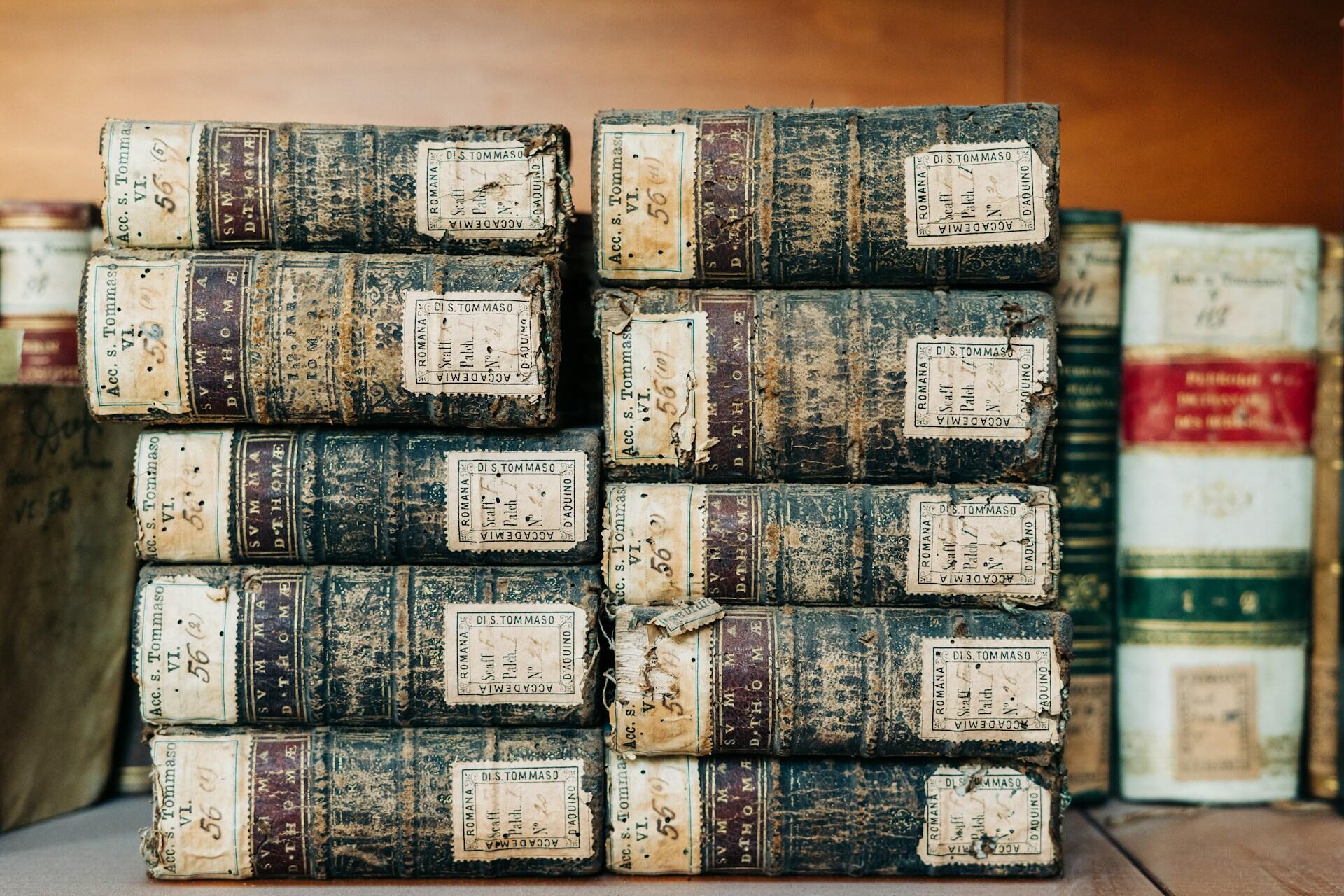
The Middle Ages inherited this idea and turned it into a curriculum: the seven liberal arts, divided into the trivium (grammar, logic, rhetoric) and the quadrivium (arithmetic, geometry, music, astronomy). And yes, the word “trivial” comes from the medieval trivium. What we now call “trivia” was, originally, the basic knowledge that everyone shared.
The definitive breakthrough came in the 18th century, when Diderot and D’Alembert published their monumental Encyclopédie with a revolutionary goal: to ensure that knowledge would no longer be the exclusive property of a select few. Two hundred and fifty years later, that same ambition fits in your pocket.
5th Century B.C.
The enkyklios paideia emerges
The Greeks define education as a journey through all areas of knowledge.
9th Century
The seven liberal arts
The European educational curriculum is structured around the trivium and quadrivium.
1751
The Encyclopédie is published
Diderot and D’Alembert compile the knowledge of their time into 28 volumes.
1979
Trivial Pursuit is invented in Montreal
Two Canadian journalists turn a missing set of Scrabble tiles into a global phenomenon.
2001
Wikipedia is launched
For the first time, the encyclopedia is written by everyone.
Why Your Brain Rewards You for Knowing Seemingly Useless Things
Here’s the best part: your brain rewards you for learning. Neuroscience research has shown that when we’re curious about something, the same brain regions associated with pleasure and motivation light up as when we receive a reward1. Translation: learning a fun fact gives you a little rush of satisfaction very similar to eating something you love 🍫.
And there’s an even better side effect. When we’re in that state of curiosity, we retain information better — even the information we weren’t looking for1. That’s why you remember perfectly the anecdote your history teacher told you, even though the entire syllabus has slipped your mind.
But beyond neuroscience, general knowledge has three practical superpowers:
- It connects ideas: Knowing a little about history, science, and art lets you understand a headline in three seconds instead of thirty.
- It protects you from fake news: When you have context, you can spot what doesn’t add up sooner. It’s the best anti-fake filter out there — and it’s free.
- It makes you a better conversationalist: Not to brag, but because you can jump into almost any topic and ask good questions.
The word "quiz" first appeared in written English in the late 18th century, and its exact origin remains a mystery to linguists. The adult human brain consumes about 20% of the body's energy, even though it accounts for only 2% of its weight. Thinking is really tiring. Wikipedia has over 60 million articles in more than 300 languages.
From Trivial Pursuit to Viral Quizzes: When Knowledge Became a Game
On a December evening in 1979, two journalists sat down to play Scrabble at Chris Haney’s home in Montreal and discovered the box was missing tiles. Haney was a photo editor; his friend Scott Abbott was a sports reporter. Instead of going out to buy another game, they spent the next few hours inventing one2.
That’s how Trivial Pursuit was born. The first 1,100 copies went on sale in Canada in 1981, and the game went on to sell more than 100 million copies worldwide — turning general knowledge questions into the default after-dinner activity for a generation2.
copies around the world.
Television did the rest. Shows like “Who Wants to Be a Millionaire?” (created in the UK in 1998) were exported to more than 100 countries and proved something important: watching someone think under pressure is just as entertaining as any TV series.
The internet brought it all full circle. Quizzes like the one you just took inherit that DNA directly: they get shared, and they awaken that little voice inside your head that whispers, “I’m sure I’ll score higher than you.”
What’s your favourite subject area on a general knowledge test?
How Can You Improve Your General Knowledge Without It Feeling Like Studying?
No one improves their general knowledge by cramming random facts. You improve it through a buildup of curiosity: a documentary here, a podcast on your commute there, an article that leads you to another. These are the routines that work best:
- The “Wait, why?” rule: Whenever something doesn’t quite add up, look it up right then and there. Thirty seconds today are worth more than an hour of review tomorrow.
- Turn your commutes into classes: Educational podcasts work because they don’t require your full attention. CBC’s Ideas is a good place to start if you want something Canadian in your ears.
- One nonfiction book for every two fiction books: Don’t give up what you love — just alternate.
- Friday documentary: One a week, no excuses. The National Film Board’s online collection is a good place to start.
- Play: Quizzes, trivia, contests. Learning through competition means learning without even realizing it.
General knowledge isn’t about knowing everything, because that’s impossible. It’s about having enough pieces of the puzzle to make the world make sense and, above all, about keeping the desire to find the missing ones.
So, if your score wasn’t what you expected, here’s some good news: it’s the only test in your life that you can retake tomorrow — with more facts in your head and without anyone holding it against you.
Are you up for sharing your score in the comments and challenging someone else? 👇🏻
Sources
Sources
- Gruber, Matthias J., Bernard D. Gelman, and Charan Ranganath. “States of Curiosity Modulate Hippocampus-Dependent Learning via the Dopaminergic Circuit.” Neuron, vol. 84, no. 2, 2014, pp. 486–496, sciencedirect.com. Accessed 21 Aug. 2026.
- “How Curiosity Changes the Brain to Enhance Learning.” ScienceDaily, University of California – Davis, 2 Oct. 2014, sciencedaily.com. Accessed 21 Aug. 2026.
- “Trivial Pursuit.” The Canadian Encyclopedia, Historica Canada, thecanadianencyclopedia.ca. Accessed 21 Aug. 2026.
Summarize with AI:
Did you like this article? Leave a rating!

 Loading...