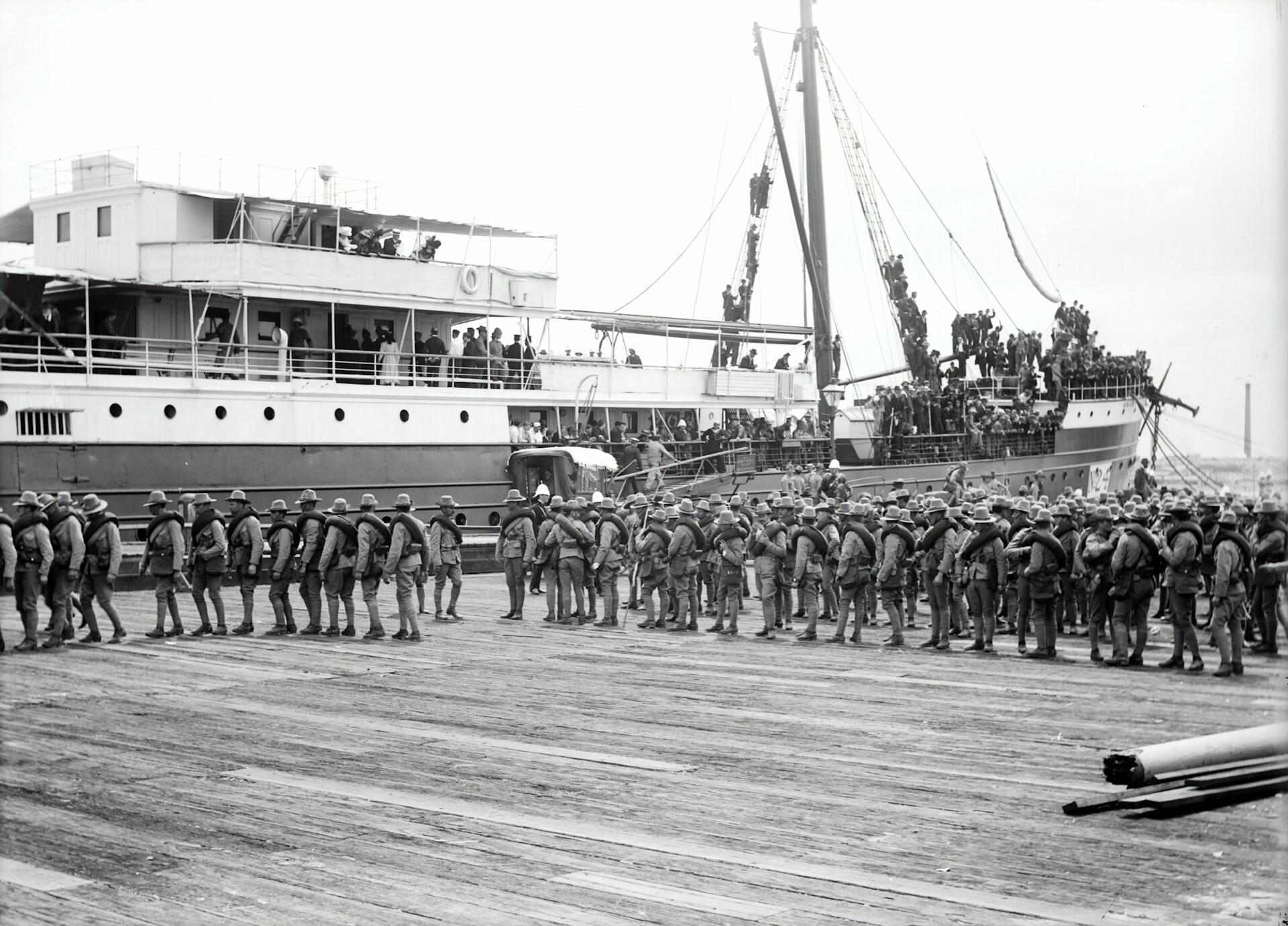
The First World War was one of the most devastating conflicts in history, and its effects are still felt today. It redrew the map of Europe, introduced new and terrible weapons, and left a deep mark on Canada, a young country of around 8 million people at the time.

Whether you've studied it in history class, traced a family member's service, or paid your respects at a Remembrance Day ceremony, this World War 1 quiz will test how much has stuck. You'll tackle questions on the causes of the war, the major battles, key treaties and Canada's role, starting with the basics and building to some real head-scratchers.

Each answer comes with a short explanation, so you'll learn something even if you miss a question. Ready to put your WW1 trivia knowledge to the test?

Quiz

Quiz :
WWI Quiz
01
13
Q1- In which year did the First World War begin?
Go to next quiz slide button
02
13
Q2- Which of these countries fought as part of the Central Powers?
Go to previous quiz slide buttonGo to next quiz slide button
03
13
Q3- Which event in June 1914 set off the chain of events leading to the war?
Go to previous quiz slide buttonGo to next quiz slide button
04
13
Q4- Which US president led America into the war in 1917?
Go to previous quiz slide buttonGo to next quiz slide button
05
13
Q5- What was the name for the contested strip of ground between opposing front-line trenches?
Go to previous quiz slide buttonGo to next quiz slide button
06
13
Q6- Which poison gas did German forces release at the Second Battle of Ypres in April 1915?
Go to previous quiz slide buttonGo to next quiz slide button
07
13
Q7- What was the main idea behind Germany's Schlieffen Plan?
Go to previous quiz slide buttonGo to next quiz slide button
08
13
Q8- Which battle, beginning on July 1, 1916, saw the British Army suffer around 57,000 casualties on its first day?
Go to previous quiz slide buttonGo to next quiz slide button
09
13
Q9- Which treaty, signed in 1919, formally ended the war between Germany and the Allied Powers?
Go to previous quiz slide buttonGo to next quiz slide button
10
13
Q10- Which 1916 naval battle was the largest clash between battleship fleets in the war?
Go to previous quiz slide buttonGo to next quiz slide button
11
13
Q11- What did Germany's secret Zimmermann Telegram of 1917 propose?
Go to previous quiz slide buttonGo to next quiz slide button
12
13
Q12- Where did the first tank-versus-tank battle take place, in April 1918?
Go to previous quiz slide buttonGo to next quiz slide button
13
13
Q13- Where was the Armistice with Germany signed in November 1918?
Go to previous quiz slide buttonGo to next quiz slide button
You have answered all the questions!
Go to previous quiz slide button
%
Other readers' results (%)
Start again
Share the quiz
Share on Facebook
Facebook
Share on WhatsApp
WhatsApp
Share on X
X
The best History tutors available
Alex hartman
5
5 (29 reviews)
Alex hartman
$80
/h
Gift icon
1st lesson is free!
Qasim
5
5 (25 reviews)
Qasim
$18
/h
Gift icon
1st lesson is free!
Arthur
5
5 (11 reviews)
Arthur
$40
/h
Gift icon
1st lesson is free!
Alaa
5
5 (64 reviews)
Alaa
$75
/h
Gift icon
1st lesson is free!
Masa
5
5 (10 reviews)
Masa
$60
/h
Gift icon
1st lesson is free!
Layla
5
5 (10 reviews)
Layla
$60
/h
Gift icon
1st lesson is free!
Natasha
5
5 (8 reviews)
Natasha
$70
/h
Gift icon
1st lesson is free!
Sara
5
5 (7 reviews)
Sara
$25
/h
Gift icon
1st lesson is free!
Alex hartman
5
5 (29 reviews)
Alex hartman
$80
/h
Gift icon
1st lesson is free!
Qasim
5
5 (25 reviews)
Qasim
$18
/h
Gift icon
1st lesson is free!
Arthur
5
5 (11 reviews)
Arthur
$40
/h
Gift icon
1st lesson is free!
Alaa
5
5 (64 reviews)
Alaa
$75
/h
Gift icon
1st lesson is free!
Masa
5
5 (10 reviews)
Masa
$60
/h
Gift icon
1st lesson is free!
Layla
5
5 (10 reviews)
Layla
$60
/h
Gift icon
1st lesson is free!
Natasha
5
5 (8 reviews)
Natasha
$70
/h
Gift icon
1st lesson is free!
Sara
5
5 (7 reviews)
Sara
$25
/h
Gift icon
1st lesson is free!
Let's go

What Caused World War I? 🌍

Historians still debate the causes, but many teachers use the MAIN acronym to organize them:

Militarism: the major powers were building up armies and navies and planning for war.
Alliances: a web of agreements meant a local dispute could drag in several nations.
Imperialism: rivalry over colonies and trade fuelled mistrust between empires.
Nationalism: pride, and in the Balkans the push for independence, raised tensions.

No single factor explains the war on its own. Together they created a situation where one assassination could set off a continent-wide conflict, which is why it's worth studying the lead-up as closely as the fighting itself.

Canada and the Great War 🇨🇦

When Britain declared war on Germany on August 4, 1914, Canada was automatically at war as part of the British Empire, although it was Canada's own Parliament that decided how to contribute. With a population of around 8 million, the country raised a large overseas force through both volunteers and, from 1917, conscription. More than 600,000 Canadians served in uniform, and around 61,000 died during the war.

Canadian troops earned a reputation as formidable fighters at Second Ypres in 1915, the Somme in 1916, Passchendaele in 1917 and the final Hundred Days offensive in 1918. The capture of Vimy Ridge in April 1917, when four Canadian divisions attacked together for the first time, became a defining moment in the country's sense of identity.

Remembrance Day

Remembrance Day is observed every year on November 11, marking the armistice that ended the fighting in 1918. It was originally called Armistice Day and was renamed Remembrance Day in 1931. The red poppy became its symbol, inspired by "In Flanders Fields," the poem written by Canadian doctor and officer John McCrae in 1915. Today the day honours Canadians who served and died in all wars and peacekeeping missions.

WWI also left a lasting mark on Canadian society. The conscription crisis of 1917 exposed deep divisions between English and French Canada, many women gained the federal vote, and Canada signed the Treaty of Versailles in its own right and took a separate seat in the League of Nations, a major step towards full independence.

Where to Keep Exploring 📚

If the quiz has sparked your curiosity, these resources are a good next step:

The Great War was brutal, complex and deeply connected to Canada's story, which is why it's still taught and remembered more than a century later. Whatever you scored, there's always more to learn about the people and decisions behind the dates. How did you do? Share your result in the comments, and let us know which question tripped you up.

Summarize with AI:

Did you like this article? Leave a rating!

5.00 (2 note(s))
Loading...

Ryan Myers - Editorial Manager Superprof Canada

As Editorial Manager of the Canadian Superprof blog, I combine my passion for independent learning with my expertise in content creation to guide and inspire readers.