


Maybe you've never thought about chemistry before. For some of you may have thought it was an awful subject school. You learned about chemical reactions and the periodic table, but chemistry is much more than these two things. Chemistry plays one of the most important roles in our everyday life. It's a subject we need people to have a good understanding of so we can continue to move forward. Chemistry is much more than a periodic table. Considering studying chemistry is a great choice. You can start to understand the world better and help make the world a better place.
Chemistry is often referred to as the Central Science as most scientists will have to study chemicals at some point in their studies or research. Biologists study all the chemicals used by living organisms, geologists and environmentalists research chemicals and compounds found in soils, rocks and minerals. Even astrophysicist has to research the chemicals compositions of planets, stars and moons.
With so many ramifications, chemistry is the one subject you will not be able to escape if you are interested in a scientific career.
From their dark beginnings centuries ago, alchemists have gained more and more knowledge about the world surrounding them and the reactions naturally occurring in nature. For long these pro-chemist thought that alchemy would allow them to transform any metal into gold. It is a feat still to be achieved (at least not in a way that makes any economic sense).
Find out about chemistry tutors here.

Since French naturalist, Antoine Lavoisier, set the rules of mass conservation in 1774, chemists have been involved in much of the scientific advances the world has witnessed for the past 250 years.
Louis Pasteur's original research was in crystallography, a specialized field of chemistry. From Sir William Ramsay in 1904 to Sir Gregory Winter in 2018, more than two dozen British Chemists have received a Nobel prize for their research.
If you are curious about the world, always wondered what is the secret behind caramel and would like to save the planet's environment, you should seriously consider a career in chemistry. Below are more reasons why you should pick chemistry lessons for your GCSE's, A-levels or university studies and why chemistry is the career path for you.
If you're looking for a chemistry tutor have a look at Superprof and choose a teacher according to your budget.
"The country which is in advance of the rest of the world in chemistry will also be foremost in wealth and in general prosperity."
- Sir William Ramsay, a Scottish chemist who discovered the noble gases and received the Nobel Prize in Chemistry in 1904.


Benefits of Chemistry Lessons
Socrates, a famous philosopher, once said "the unexamined life is life not worth living". For anybody with a fascination for the world around them, you would agree with Socrates. You want to understand how things work and you ask the question why? Why do things happen? Studying chemistry is about these questions exactly and working in a chemistry career you'll get to answer these questions. After all, chemistry is all around us, even inside our body there are tons of chemical reactions happening. From when we breathe, eat to even sit.
We need to study chemistry because it's fundamental to our lives. Chemistry is needed for our basic needs like clothing, food and shelter. You can even take that a step further and say chemistry is needed for health, clean air, water and soil. It's needed to understand everything around us. It's also going to solve future problems such as sustainable energy, food production, saving the environment and so many other things. The continued research done by chemistry professionals will be an asset to the world for the present and future. Below we've listed 8 more benefits to studying chemistry.
1 - Understand the World Around You
When you study chemistry, you will uncover the reason everything around you happens. Why does chocolate taste so good, why does soap clean or why the sky is blue?
Comprehending the atomic structure of atoms, the electrochemistry of an acid-base solution or the stoichiometry of a molecule is critical to understand everything in your environment, from the toothpaste you use every morning to the phone battery your charge every day.
Every reaction in nature is ruled by chemistry, from metal rusting to your digestion. If you have a curious mind, then a chemistry course will help you answer all the questions you may have about the world and your environment.
For example, did you know that leaves change colours in autumn because chlorophyll production is regulated by light? As the grows shorter the amount of chlorophyll in leaves decreases and the green chemical that is so prevalent during spring and summer days give way to other compounds present in the leaves.
Anthocyanin pigments production increases as sugar level rise during autumn, giving leaves yellow colours. Carotenoids, whose production is not affected by sunlight, will provide the leaves with an orange and brown hue.
And why do we cry when we cut onions? Simply because sulfenic acids and enzymes contained in onion cells are released when you start slicing and propanethial S-oxide, a volatile sulphur compound gas is produced. The natural reaction for our eyes is to create tears to wash away the irritant, but as propanethial S-oxide mixes with the water of our tears, sulphuric acid is produced, making the whole cooking thing, a messy crying experience.
Here is where to find an online organic chemistry course.

2 - Be Better Educated About What You Buy
Studying chemistry will also make you a more knowledgeable buyer. As most of the food we ingested is heavily processed, it has become more critical to understand what we ingest. However, the more complicated food labels have grown, the hardest it is to make sense of all the different preservers, sweeteners, food coloring agents and stabilizers contains in our food.
By understanding what food additive such as Citric acid, Mono-sodium glutamate, Sodium benzoate, Sodium nitrite or Guar Gum is, you will know which ones are safe to eat and which ones you should keep out of your diet.
Start taking online Chemistry courses Canada here.
3 - Be A Better Cook
Being a good chemist will make you a better cook. All food is made of chemical compounds and cooking is merely changing chemical bonds, using the properties of matter and playing around with combustion, oxidation, reduction, solubility and chemical reaction, to make ingredients as tasty as possible.
One of the primary reactions involve in cooking is the Maillard reaction. It is the primary chemical reaction behind the deliciousness of cooked foods and happens when amino acids, the building block of all animal and vegetable proteins, react with reducing sugars contained in most food. Most cooking techniques (frying, roasting, searing and baking and even very slow cooking), involve some degree of Maillard reaction.
Caramelisation is another excellent example of the chemistry behind cooking. Unlike the Maillard reaction, caramelization involves what chemists refer to as pyrolysis, which you probably call burning. When sugars react with water above a certain temperature (between 110C and 180C depending on the sugars involved), dozens of chemical reactions happen, and hundreds of different chemical compounds are released.
Discover good chemistry tutor in Windsor-Ontario here.
"Chemistry begins in the stars. The stars are the source of the chemical elements, which are the building blocks of matter and the core of our subject."
- Peter Atkins, English chemist and a Fellow of Lincoln College at the University of Oxford
4 - Understand both Physics And Biology
As a central science, chemistry will be the best tool at your disposal to understand both physics and biology.
Biochemistry and Biophysics are two fields the two fields at the crossroad between the three sciences. Both involve inorganic and organic chemistry, as well as general chemistry.
Biochemists work in biotechnologies, medicinal chemistry or forensic science and they're often working for environmental agencies, hospitals and research laboratories.
Start studying chemistry and pick the right tutor to help you in your studies.
5 - Use Your Brain AND Your Hands
Unlike hard sciences such as physics and maths, which mainly use your brain to solve complicated equations and problems, chemistry is a very hands-on field.
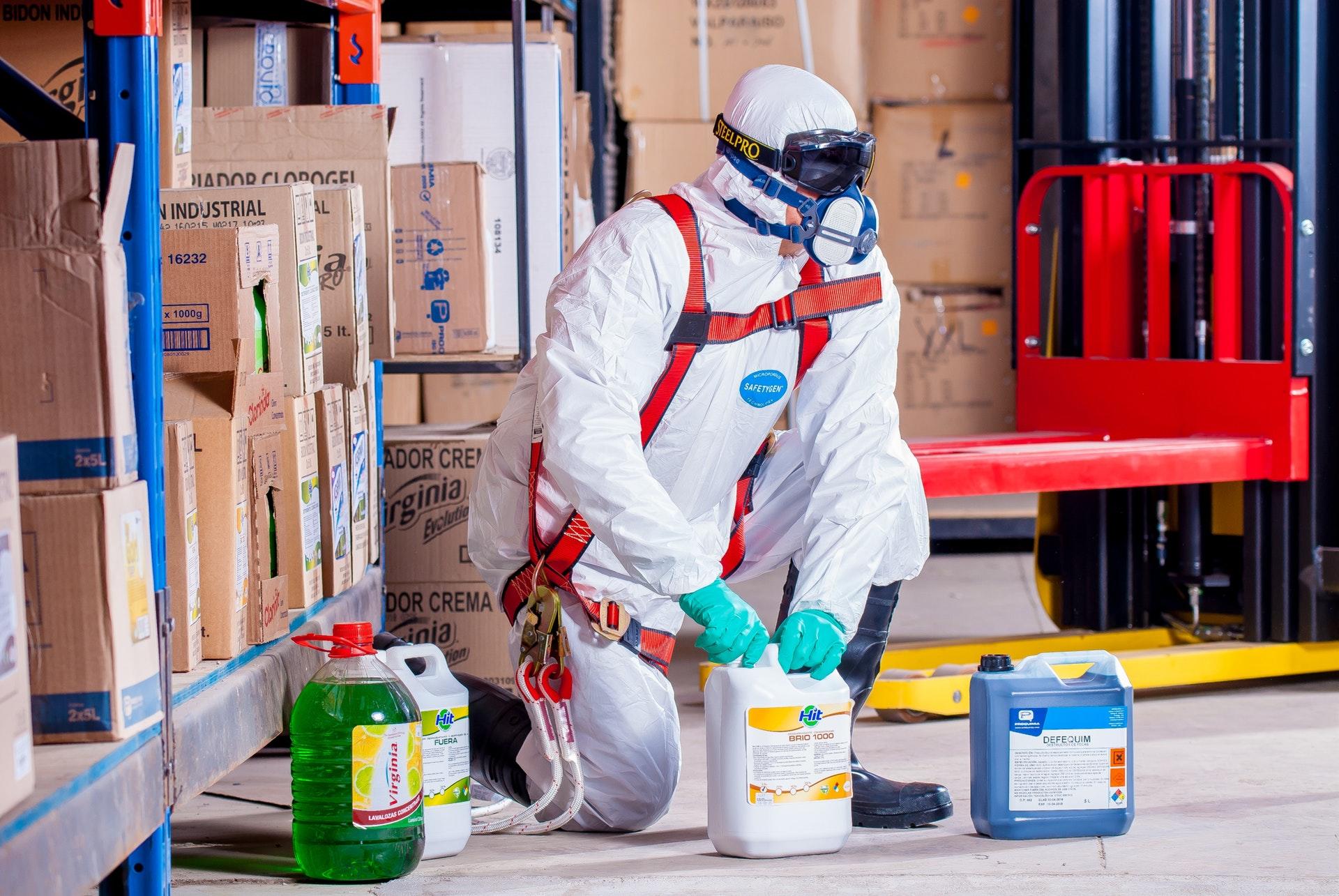
As a chemist you will have to plan your experiment but also carry them out, often manipulating dangerous chemicals and using very complicated contraptions and instruments such as mass-spectrometers, chromatography machines or distillation columns.
Check out chemistry tutors here.

6 - Have Fun
Chemistry is the one science that can be very fun (if practised safely). It is very easy to play around safe and straightforward chemicals and obtains astonishing results.
Everyone has seen the viral videos of diet coke and Mentos candies producing incredible jets of soda, and you can easily reproduce this safely at home. But chemistry is much more than that.
Why not create polymer marbles or change the colour of the flame in your home chimney? Using simple, everyday products that you can find around the house, you can have a lot of fun and learn about the reasons behind the reactions you create and observe.
"A detective with his murder mystery, a chemist seeking the structure of a new compound, use little of the formal and logical modes of reasoning. Through a series of intuitions, surmises, fancies, they stumble upon the right explanation, and have a knack of seizing it when it once comes within reach."
- Gilbert Lewis, American physical chemist, known for the discovery of the covalent bond and his concept of electron pairs.
7 - Understand The News
Every day, we are bombarded with news about petrol pollution, water contamination, medical discovery and advances or product recalls, but how much of this do you really understand?
Taking chemistry classes will make you more informed about what is going on in the world. It is also essential to understand the repercussions of events such as oil leaks in the oceans or chemical contamination of underground aquifers.
As most of the industries involved in climate change are regulated by national laws, understanding what is going on in your neighbourhood, city or country, will also make you a more informed voter.
8 - Make a Better World
The chemistry industry has been the main contributor to the world's major pollution problems. For the past 70 years, with the advent of the intensive use of fertilizer in our agriculture, chemists have been at the forefront of most pollution crisis.
Plastic wastes, CO2 emissions, contaminated waters or barren soils can all be linked to the misuse of chemistry, mainly for selfish economic reasons. But the mess that was created by chemists can also be solved by chemists.
Recycling plastics and coming up with new materials and use for what we long considered trash is one of the many challenges that young professional chemists are facing today. CO2, one of the main greenhouse gas, is mainly produced transportation using fossil fuels. Chemists are now working on capturing atmospheric carbon dioxide and using it as a clean energy source.
Much more is to be done to save our planet from the effect of our industries, and most of the work will be done by chemists.
Improve yourself with a chemistry tutor Brampton here on Superprof.

What Factors Should I Consider Before Studying Chemistry?
These days, it isn't just about who works hard and struggles to excel but also those who work smart. It is preferable to work smartly than struggle intensively without any strategy. This is chemistry for you.
Chemistry is fun when you know how to approach the curriculum. Not everyone who studies this course comes out with distinction. Without proper study techniques, one is said to be chaos walking without any direction. Studying chemistry entails a lot. And it extends beyond picking up your books to read.
What is chemistry? Chemistry involves hands-on experience. It is a course for those who derive pleasure in understanding things around them. Chemistry makes the world a better place.
Before you jump right into this scientific field, have you thought of its surrounding factors? Will studying chemistry help you find your purpose in life? Below are some factors to consider before studying this course:
Chemistry involves hands-on experience
Without practical experiments, online chemistry courses would be worthless. The benefits of studying this course would be minimal. For the most part, most chemists wouldn't have chosen it as their best career choice.
People love to experiment. They love to practice what they're learning. That way, it sinks into the brain. Students love to understand every bit of what their tutor is reaching them. And with experimental activities, the tendency to grasp every detail becomes higher.
Hiring a tutor is necessary
Aside from picking up books to read independently, students must also hire a tutor. Not just a random individual who knows much about chemistry but someone who has developed effective teaching patterns for years.
Picking the right choice might be overwhelming. Superprof is willing to help select a tutor from our long list of advanced scholars. You can rest assured that you're willing to learn.
Why Should You Work a Job in Chemistry?
Chemistry offers a lot of job opportunities, from nuclear chemistry to biological chemistry or analytical chemistry you can easily specialize in a field that interests you. It is also very common for chemists to be involved in other science fields and to collaborate with biologists, physicists, doctors and engineers. Working in the chemistry industry means you'll lead a rewarding life. You'll be truly able to make an impact in the world and it all starts when you start taking chemistry lessons. Most people with a background in Chemistry make an average of $92,000 a year. Chemistry is an in-demand industry that is always looking for qualified people. This could be you. Below are some of the top chemistry jobs.
Materials Scientists - find new ways to use recyclable elements such as was plastics, paper, cardboard or food industry by-products to create new materials to better serve humanity’s needs and reduce the amount of trash ending up in landfills and polluting our planet. Average Salary of $100,000.
Nanotechnologists - work with elements smaller than cells to create new surgery and diagnostic methods as well as creating more efficient drugs. Average Salary of $60,000
Chemical Engineer - develop and design chemicals for the manufacturing process. They solve problems that involve the production of chemicals, drugs, food and a lot of other products. Average Salary of $80,000.
Pharmacologists - focus on researching and understanding the chemical process. they mainly focus on creating, developing and testing new medications. Average Salary of $90,000
These 4 careers for chemistry graduates are only just the beginning. Chemistry plays a role in all of our lives. Chemistry can be found in almost every industry. Chemistry is the perfect career choice for anybody with a fascination to understand things. Learning chemistry means you'll be able to better understand the world around you.
For instance, if you look at the rusting of iron. It's a chemical process that happens all the time. Rusting is a chemical reaction called oxidation. The iron gets exposed to moisture or oxygen and then the oxidation occurs. Another great example of chemistry happening all around us is cooking an egg. High heat boils the eggs. This boiling causes a chemical reaction between the yolk and the white that leaves a film. This film is actually iron sulphide, it's caused by the yolk reacting to the hydrogen sulphide in the white. The chemical reaction is called exothermic reactions. It's examples like these that bring appreciation into the things we think our simple, like egg cooking. Having a love of chemistry means you'll want to further understand the world.
Improve yourself with a basic chemistry lessons here on Superprof.

______________________________________________________________________________________________________
"We think there is color, we think there is sweet, we think there is bitter, but in reality there are atoms and a void."
- Democritus, Greek Philosopher. Remembered for his Atomic theory about the universe
______________________________________________________________________________________________________
What Traits Should I Look for in a Chemistry Tutor?
The time has come. Suddenly, you realize that you can't do this alone. Aside from taking lessons alongside other students in class and reading extra hours at the library, you should get a tutor.
How do you pick the right choice? Simple. All you need to do is watch out for quality traits while interviewing. And while you do so, be ready to eliminate those who didn't meet your requirement from the list. What traits are we talking about? Find out below:
Discover qualified chemistry tutors in Edmonton here.
Improved Communication Skills
There's a difference between understanding chemistry and knowing how to pass on knowledge to the next individual. While so many tutors develop their knowledge but fail to enlighten students effectively, the scholars at Superprof have a reputable record of helping struggling students achieve academic breakthroughs.
What are you waiting for? At Superprof, every student is a treasure that must be nurtured carefully. Visit Superprof today and become one of our highly appraised students.
Listening Skills
If your tutor is more concerned about his views than the problem at hand, then we have a problem. Spend time to observe your interactions with the tutor and see if your objectives align.
A good tutor will help you with effective learning resources and strategies. Whatever the case may be, he's willing to offer valid solutions.
Discipline & Commitment
Discipline is one thing; commitment is another. These two traits will help you go a long way in life, regardless of the cost at hand. Find a tutor who's willing to knock over that video game with a reminder call that it's time for study. It might take more than just compelling words to do the job. Restrictions might have to be in place. Get someone willing to push you to become better.
How Do I Win A Chemistry Job Interview?
Here comes one of the most overwhelming aspects: finding a chemistry job. As a chemistry graduate, your best option would be to work in a scientific industry. Chemists are in high demand in any part of the world. The problem is winning an interview among other highly qualified candidates.

You're not the only one looking for a job. Hundreds of graduates worldwide are also in the open space, sourcing for chemistry-related opportunities to further their careers. It takes knowledge and the right strategy to become the chosen one. Here are some tips for winning a chemistry job interview among your peers:
Research
Rather than just jumping into the interview hall right away, prepare beforehand. Do your findings of the company and ensure you're knowledgeable of its history.
Most companies will ask you questions relating to their objectives and goals. Giving accurate answers should be less of a task if you dig deep into the company's profile. Best of all, the internet has that covered.
Pose a friendly body language
You don't want to look like you're begging for the job. That alone can get you disqualified immediately. Approach the interviewer with friendly body language. Wear a smile and ensure you're confident.
As students, it pays best to build our confidence level while still in school. The coming years will bring huge connections, meetings, conferences, and events. How well have you developed your confidence level? Can you boldly state your objectives and mission if chosen for the job? This is for you to answer in your mind.
Follow up with a thank-you letter
Appreciation is key to receiving more blessings in life. Don't just sit hopefully for a call. Send a Thank-you note addressed to your interviewer, telling him how grateful you're about the arrangement. Stick to the objective; don't go beyond the line.
When sending your appreciation note, it is advisable to stick to the subject matter. You're only grateful for getting an opportunity to showcase your skills and capabilities. Don't turn it into a series of mind games. Interviewers shut the door towards candidates who try to outplay the procedures given. Be clear and honest about your intentions.
How Can I Become a Great Chemist?
Choosing a chemistry-related career path implies that you use the knowledge gained from your years of study to improve things around us and pass value to society.
Chemistry is used to test and improve products around us. Every chemist is responsible for researching pharmaceutical remedies and treatments. In all, chemistry has impact in just about any area of life.
Becoming a master in chemistry is no joke. It isn't child's play; neither is it a one-day job. Professionals go through years of intensive research to gain different levels of height. Below are important tips to help you excel in a chemistry job:
Research career options & requirements
Before delving into a particular field of study, examine if it is suitable for you. Chemistry for beginners is broad with different fields and different educational requirements. While some fields of study may require just a Bachelor's degree, quite a few others prefer a Master's or PhD. before you can proceed with handling.
The world's greatest chemists and researchers studied for years before getting to where they are now. Study the different fields in chemistry and take note of their requirements.
Gain many experiences
Experience is unique. Nothing can be compared to learning about your field with practical experimentations. If you're delving into the research aspect, gaining experience is highly necessary.
Get a job
After obtaining your master's degree, BSc, or PhD., your next step should be finding a job. Seek suitable positions in basic chemistry or applied research. Most times, you may have to work in the laboratory and other times, you'll be in the office, gathering reports and rehearsing speeches.
How Does Chemistry Impact the World?
As we all know, chemistry makes the world a better place to live in. It helps to understand the universe and how it operates. It keeps us informed about food and other substances we ingest. Chemistry defines the existence of every object, reaction, or living thing.
Our body undergoes a chemical reaction. In today's world where biochemical substances are usually polluted, Chemistry keeps us enlightened on the dangers ahead. Indeed, this subject school makes life easier. But how?
- Everything in life reacts. Chemistry helps us to identify the chemicals behind a particular reaction. It protects us from the dangers of ignorance.
- Chemistry contributes to the production of healthy drugs and foods. Chemists undergo various tests and affirmations with knowledge gotten from this course to ensure safe consumption. There's a reaction behind the plants, meals, and medicines we consume. With Chemistry, our safety is assured.
- Knowing chemistry makes our day-to-day life easier. As a chemist, you know what chemicals to mix for producing effective repellents. Also, you become aware of the solutions to every problem.
- Knowing basic Chemistry helps to keep the plants around us in good form. You become aware of the different environmental reactions. Even better, you know what nutrients are beneficial to plants in your surrounding.
Mastering Chemistry takes years of practice and failure. Yes, you may be prone to failure. Some experiments may fail. With a highly experienced Chemistry tutor by your side, you can always become better.
Need a helping hand with your studies? Lots of educated scholars await you at Superprof. You can rest assured that you're willing to learn.
How to Start Working Chemistry Job?
By now you know the benefits of working in the chemistry and the amazing jobs you can have working in the field, but how do you start working in the chemistry field? Most chemistry jobs you'll need a chemistry degree. A chemistry degree will get you an entry-level chemistry job. It'll be the first thing you need to look at if you're looking to get into this field. You'll have two main options for chemistry degrees. Bachelor of Science and Masters of chemistry. These degrees have both have the same status, it'll depend on the university your apply too for which one they'll reference two. You should start by looking into your local university and seeing what chemistry degrees they offer.
Your next step after finding the school you want to attend is you need to figure out what chemistry your interested most. Chemistry has 5 different disciplines. 1. Organic 2. Analytical 3. Physical 4 Inorganics and 5. Biochemistry. Picking your discipline in chemistry is going to be your focus during school. Most degree programs are offered in 4 years, but if you want to finish your degree program sooner find out if it's possible to take summer classes. Yes, you'll be in school all year round, but you can finish a lot sooner.
Improve yourself with a chemistry tutor Vancouver here on Superprof.

After finishing your degree program, now you can start looking into chemistry jobs. You'll need to develop a good resume. Your education is going to help with your application but you also need some skills to relate. A person working in the chemistry field should have analytical, problem solving, time management, organizations, teamwork, research and presentation skills. These skills will help you in your career but will also make you an asset to any employer. If you don't have any of these skills, during your chemistry degree you can start working on gaining these skills for after graduation.
Another option a chemistry graduate is working as an intern. This isn't like in the movies when you get coffee for the staff. You can gain real-world experience working as a chemistry intern. Some schools now even have internships built into there programs. Internships work for both employer and student. The employer gets free labour and extra help while the students build experience and make connections. A lot of internships may even offer you a job after. Even if your school doesn't offer internships you can still reach out to companies and ask. Worst case scenario they say no and you move on to the next one.
After working in a chemistry career you may be thinking about gaining more knowledge. During your time working in the chemistry field, you should be continuing to educate yourself as well, but you may start looking into a Master's or PhDs. Having these extra degrees under your belt can make you a better job candidate and you can expect to be paid more. It's good in general to consider furthering your education to increase your knowledge. You'll be highly valued by employers and your peers.
Start Studying Chemistry Today
Now is the time to enroll in a chemistry degree program. There are so many great benefits you can achieve when you start studying chemistry. Altogether you'll have a better understanding of the world and be able to answer questions about the world nobody can answer. You'll live a life of exploration and fascination when you start working in a chemistry career field. You could be working in a demanding career field while getting paid well. You'll also have the opportunity to be apart of the change. Not every career choice out there are you able to make an impact on the world. With chemistry, you'll get to be a part of the good change in the world. It all starts when you work in the field of chemistry. Gaining employment at chemistry will be one of the most impactful things you'll do. Start by exploring chemistry degree programs. The time is now.
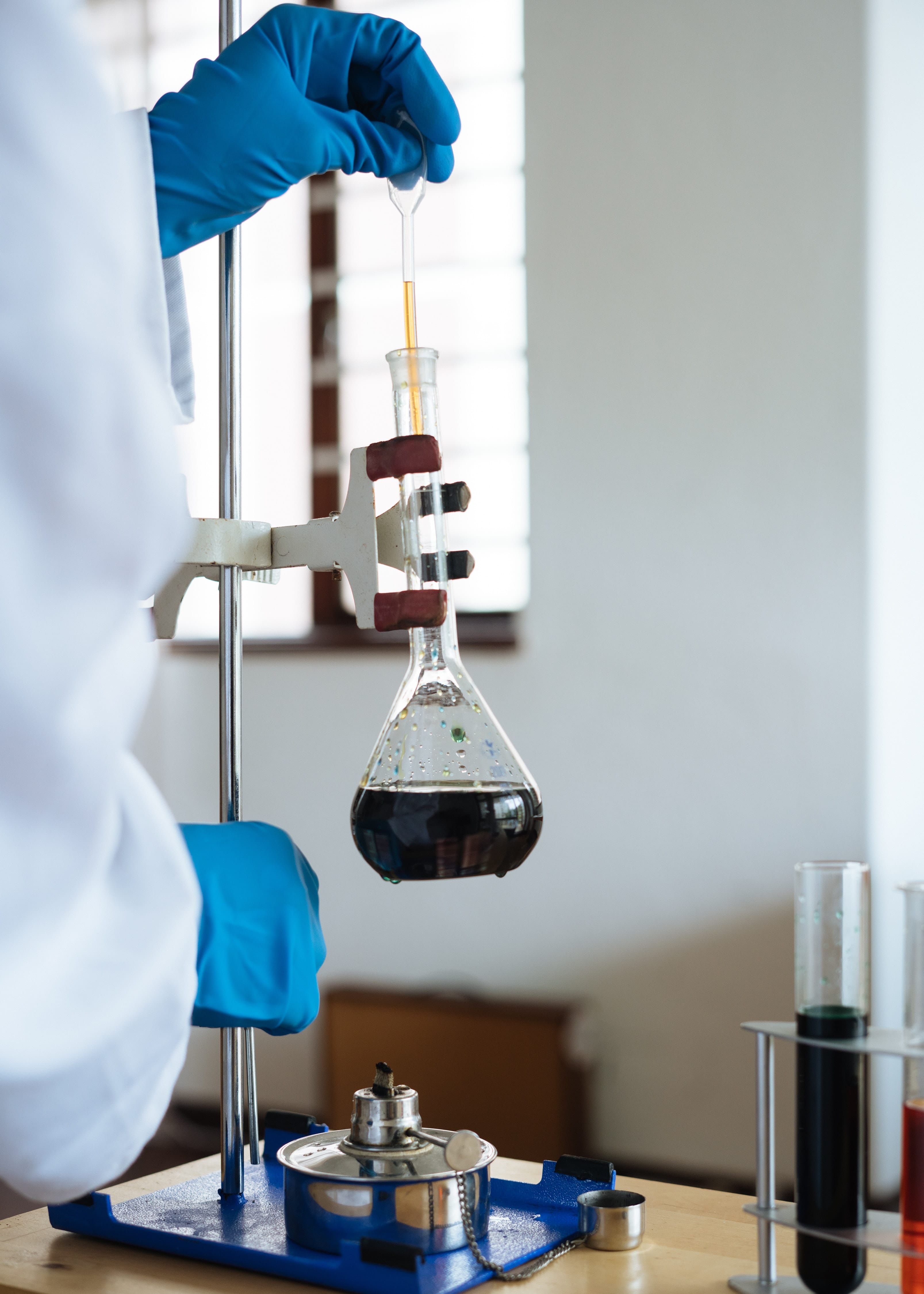
Chemistry is much more than learning the periodic table of elements.
Whatever field of science you are considering for your career, chemistry will always come in handy to help you understand everything around you, from the clothes you wear to the food you eat. And considering the great damages we have caused to our environment, it seems that chemists will be much needed to help fix issues created by the previous generation.
Check out our article to find out more about what a future career in Chemistry looks like.
Summarize with AI:
Did you like this article? Leave a rating!


 Loading...
